

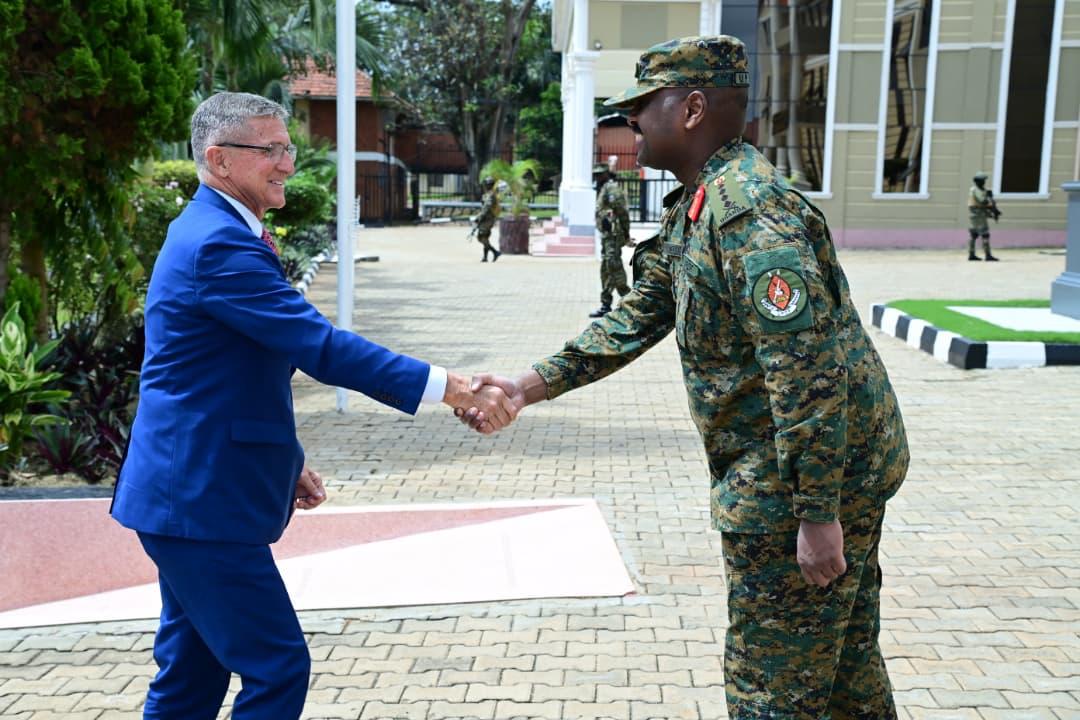
Meetings are rarely ordinary events. People prepare for them, dress for them, and sometimes hold them in expensive boardrooms designed to project seriousness and influence. Individuals and institutions carefully choose which meetings to attend and which to decline because meetings communicate messages—sometimes more powerfully than public statements. Even the timing and setting of a meeting can carry meaning.
This context helps explain the significance of the meeting that took place on March 14, 2026 at the Special Forces Command headquarters in Entebbe. The discussions were followed by a dinner hosted by Gen. Muhoozi Kainerugaba at Serena Hotel Kigo. The fact that the meeting extended into a hosted dinner is itself noteworthy. Such arrangements often signal that discussions went well and that both sides saw value in extending engagement beyond formal talks.
The special guest was Michael T. Flynn, a retired lieutenant general in the United States Army who previously served as Director of the Defense Intelligence Agency and briefly as National Security Adviser to President Donald Trump in 2017.
Flynn is a 33-year US Army veteran with deep experience in intelligence, special operations and military strategy. His presence in Uganda—and specifically his meeting with Muhoozi—naturally raises questions about the strategic meaning behind the visit.
During the discussions, Flynn praised Uganda’s military leadership and the stability provided by the Uganda People’s Defence Forces (UPDF). According to statements released after the meeting, he said the role of the army had helped drive Uganda’s transformation and argued that continued peace and sound military leadership would sustain the country’s developmental progress.
Muhoozi briefed Flynn on the history of the UPDF and its role in regional peacekeeping operations across Africa. Uganda’s deployments in missions such as the African Union Transition Mission in Somalia (ATMIS) have long made the UPDF a key security partner for Western governments seeking to counter extremist groups like Al-Shabaab.
The two men also discussed leadership development and military education. Muhoozi highlighted the possibility of adapting American-style programmes such as the Reserve Officers’ Training Corps (ROTC) model to Uganda’s military education system, particularly as a way of instilling patriotism and civic values among young people.
Muhoozi described the meeting as “the beginning of a very consequential and important relationship,” noting that UPDF officers had previously studied Flynn’s academic papers while attending training programmes at Fort Leavenworth in the United States.
Flynn, for his part, emphasised the importance of long-term institutional ties between militaries. He noted that such relationships are most valuable during times of crisis, arguing that building trust between security institutions is a long-term strategic investment.
The meeting comes at an interesting moment in the broader relationship between Uganda and the United States.
President Yoweri Museveni has previously rejected the idea of establishing a permanent U.S. military base in Uganda, explaining that the country prefers cooperation without hosting foreign bases. Meanwhile, geopolitical tensions elsewhere—from conflicts in the Middle East to evolving alliances among global powers—have increased speculation that Washington may be reassessing the geographic distribution of its military partnerships.
Relations between Kampala and Washington have also experienced friction in recent years. Reports in February 2026 suggested that the Trump administration, which began its second term in January 2025, was reviewing aspects of the partnership with Uganda. Around the same time, Uganda reportedly hired a U.S. lobbying firm to improve its diplomatic standing in Washington.
Another moment of tension came on March 2, 2026, when Muhoozi issued a public warning directed at the United States and Israel over strikes against Iran. In the statement he suggested that Uganda possessed the capability to strike targets more than 20,000 kilometres away, framing his remarks within broader solidarity among countries associated with the BRICS bloc and the Arab League. Reports later indicated that President Museveni cautioned him against making such statements.
Despite these tensions, security cooperation between the two countries has continued largely uninterrupted. The UPDF remains one of Washington’s most important military partners in East Africa, particularly in counter-terrorism operations and regional stabilisation efforts.
This context raises the question: how significant was the Flynn–Muhoozi meeting?
Some analysts believe the meeting was moderately significant rather than transformative. In their view, it represents more of a symbolic and institutional engagement than a major diplomatic breakthrough.
One key factor is that Flynn’s visit was not an official U.S. government mission. He is retired from active military service and currently serves as chairman of the nonprofit organisation America’s Future. Operating in a private capacity gives the American side a degree of flexibility. Washington can maintain contact with Ugandan security leaders while avoiding the political implications of sending an official State Department envoy or an active-duty general during a period when the bilateral relationship is under review.
Using a retired but highly credentialled figure is also a familiar technique in international diplomacy. Former officials often serve as informal envoys or intermediaries who can explore cooperation without formally committing governments. For countries navigating sensitive political dynamics, such backchannel engagements can be useful tools.
The discussions themselves also focused on relatively non-controversial areas of cooperation. Leadership training, military education and long-term institutional relationships are issues that align with long-standing American security priorities in Africa. The United States has consistently supported professionalisation programmes within African militaries, particularly those involved in peacekeeping and counter-terrorism missions.
Flynn’s public praise for the UPDF therefore reinforces the idea that Washington continues to value Uganda’s military partnership even when political relations encounter friction.
The meeting also carries domestic implications within Uganda. As Chief of Defence Forces and Senior Presidential Adviser on Special Operations—and widely viewed as a potential future national leader—Muhoozi benefits from international engagement with prominent global security figures. Hosting a former U.S. national security adviser and referencing shared professional study at institutions like Fort Leavenworth reinforces his image as a military leader operating within international strategic networks.
At the same time, the immediate policy impact of the meeting appears limited. No new military aid packages, weapons agreements or joint training exercises were announced. Instead, the conversations centred on building relationships and exploring possible future cooperation in education and leadership development.
Flynn is reportedly scheduled to continue engagements with UPDF leaders and academic institutions during his visit, suggesting that the broader significance of the trip may lie in the networks and discussions it initiates rather than any single meeting or dinner.
In that sense, the event may best be understood as part of a longer strategic conversation.
For the United States, maintaining military-to-military engagement helps protect key national security interests in the region. Counter-terrorism operations, stability in the Great Lakes region and the Horn of Africa, and the broader balance of influence among global powers remain important priorities for Washington.
For Uganda, continued engagement with American security institutions reinforces the international profile of the UPDF and underscores the military’s role as a central pillar of the country’s foreign policy.
The Flynn–Muhoozi meeting therefore sends a subtle but clear message: even when political relations between governments face strain, strategic military relationships often continue behind the scenes.
In the near future, it may be more realistic to expect quiet security cooperation and professional exchanges rather than high-profile state visits or dramatic diplomatic announcements.
In many ways, that quiet continuity may be the strongest indication that the Uganda–United States relationship remains intact—and perhaps slowly moving toward repair.
